
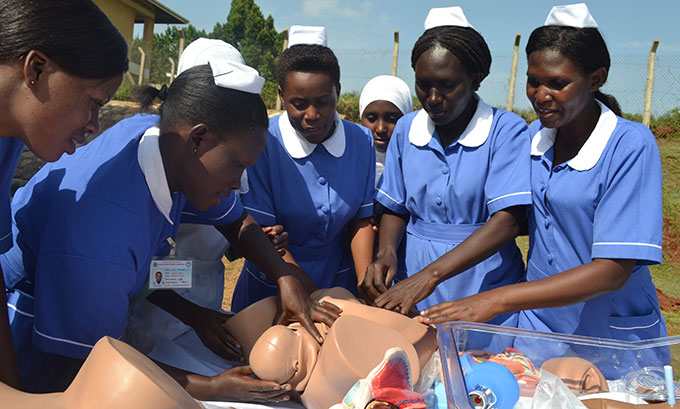
Midwifery and obstetrics use a wide range of specialized terms to describe physiological processes, conditions, complications, and clinical procedures related to pregnancy, labour, and the puerperium. The following glossary presents clear and simplified definitions of commonly used terms in midwifery practice.
Neonatal and Pregnancy-Related Conditions
- Phototherapy: The use of light to convert bilirubin in jaundiced infants into a form that can be excreted without liver conjugation.
- Polyhydramnios: Excessive accumulation of amniotic fluid (usually >1500 ml at term).
- Pica: The craving and eating of non-food substances such as soil or chalk during pregnancy.
- Hyperemesis gravidarum: Severe nausea and vomiting in pregnancy requiring hospital admission due to dehydration or weight loss.
- Antepartum haemorrhage: Bleeding from the genital tract after 20 weeks of gestation but before delivery of the baby.
- Abdominal gestation: A type of ectopic pregnancy where implantation occurs within the abdominal cavity outside the uterus.
- Ectopic gestation: Pregnancy occurring outside the uterine cavity, commonly in the fallopian tubes.
- Abortion: Expulsion of the products of conception before fetal viability.
- Preterm infant: A baby born before 36 completed weeks of gestation.
- Asphyxia neonatorum: A condition in which a newborn fails to breathe adequately due to oxygen deprivation during birth.
- Erythroblastosis fetalis: Presence of immature red blood cells in the newborn, often due to blood group incompatibility.
- Cephalhaematoma: A collection of blood beneath the periosteum of a skull bone in a newborn.
- Down syndrome: A chromosomal disorder caused by the presence of an extra chromosome 21.
- Teratogen: Any substance or agent that can cause congenital abnormalities in the developing fetus (e.g., thalidomide).
Physiological Signs and Pregnancy Changes
- Linea nigra: A dark vertical line that appears on the abdomen during pregnancy due to hormonal changes.
- Colostrum: Yellowish breast fluid produced before true lactation begins, rich in antibodies.
- Braxton Hicks contractions: Irregular, painless uterine contractions occurring during pregnancy.
- Lightening: The descent of the fetal head into the pelvis, usually in late pregnancy.
- Quickening: The first perception of fetal movements by the mother.
- Vernix caseosa: Waxy protective coating on the skin of the fetus in utero.
- Show: A mucus and blood discharge indicating cervical dilation at the onset of labour.
Labour and Delivery Terms
- Dystocia: Difficult or abnormal labour.
- Effacement: Thinning and shortening of the cervix during labour.
- Dilatation: Opening of the cervix to allow passage of the baby during delivery.
- Vertex: The area of the fetal head between the occiput and sinciput presenting during delivery.
- Episiotomy: A surgical incision made in the perineum to enlarge the vaginal opening during childbirth.
Postnatal and Puerperal Terms
- Lochia: Postpartum vaginal discharge from the uterus during the puerperium.
- Puerperium: The period of approximately six weeks after childbirth during which the uterus returns to its pre-pregnancy state.
- Involution: The process of the uterus returning to its normal size after delivery.
- Galactorrhoea: Excessive or abnormal milk production not associated with breastfeeding.
Maternal and General Obstetric Terms
- Gravid: A pregnant woman.
- Gravida/Multigravida: A woman who has been pregnant once (gravida) or more than once (multigravida).
- Para/Multipara: A woman who has delivered one (para) or more than one (multipara) viable infants.
- Nullipara: A woman who has never delivered a viable infant.
- Menarche: The first occurrence of menstruation.
- Hydrorrhoea gravidarum: Discharge of clear fluid from the uterus during late pregnancy.
- Abruption: Separation or tearing away, commonly used in placental abruption.
- Atresia: Absence or closure of a normal body opening or canal (e.g., oesophageal atresia).
- Biopsy: Examination of tissue removed from a living body for diagnostic purposes.
- Rectocele: Prolapse of the rectum into the vaginal wall.
- Vagitus uterinus: Rare condition where a fetus produces a cry in utero.
Hormonal and Medical Agents
- Ergometrine: A drug derived from ergot used to stimulate uterine contractions and control postpartum bleeding.
Special Obstetric Concepts
- Gestation: Pregnancy or the period of fetal development in the uterus.
- Gestational age: Duration of pregnancy from the first day of the last menstrual period.
- Gravidarum: A term referring to a pregnant woman (often used in medical conditions such as hyperemesis gravidarum).
Conclusion
A strong understanding of midwifery terminology is essential for effective communication, accurate documentation, and safe clinical practice. These terms form the foundation of obstetric knowledge and are widely used in maternal and newborn care.


Social Plugin